


Jurema preta grows readily from seed if you do two things: break the hard seed coat so water can get in, and keep the seed warm, ideally around 25 °C. Treated seed comes up in 5 to 10 days and makes a small plant in about three months (Embrapa). In most of Europe the tree has to live indoors or in a heated greenhouse for at least the winter, because it never meets frost in its natural range.
Before you order seeds, check the legal page. Growing the tree is not restricted in the Netherlands, but France lists Mimosa hostilis itself as a narcotic plant.
From seed to tree, with timings
| Stage | Timing | Source |
|---|---|---|
| Seed | 3 to 4 mm, about 110,000 to the kilo; viable for up to a year at room conditions; one study germinated seed stored for four years | Embrapa; Camargo-Ricalde and Grether 1998 |
| Scarified seed | 1 minute in boiling water, or a nick in the coat | Embrapa; Benedito et al. 2017 |
| Swelling | after 72 hours in water, 60 % of treated seeds showed a root tip, against 8 % of untreated seeds | Benedito et al. 2017 |
| Seedling | emerges 5 to 10 days after sowing | Embrapa |
| Pricking out | 1 to 2 weeks after germination starts, or at 3 to 5 cm | Embrapa |
| First adult leaf | weeks 12 to 14 | Camargo-Ricalde and Grether 1998 |
| Plantable sapling | about 3 months after sowing | Embrapa |
| Young tree | about 4.5 m at five years, in the wild | Azevêdo et al. 2014, citing Maia 2004 |
Step 1: break the seed coat
The seed coat is impermeable to water. That is a survival trick in the wild, where only a small share of seeds germinate in any one year, but it means untreated seed sown at home mostly sits in the compost and does nothing. In a Brazilian trial only 5 % of untreated seeds produced a seedling (Benedito et al. 2017, Semina: Ciências Agrárias 38(1)).
Store seed you are not sowing yet in a cool, dry, dark place. Embrapa gives a viability of up to a year at room conditions; the Mexican seeds in the study cited below still germinated well after four years in storage.
Two home methods worked in the trials:
- Hot water. Embrapa recommends 1 minute in boiling water. In the Brazilian trial, immersion at 100 °C for anything from 1 to 6 minutes overcame dormancy. Pour the seeds into a small cup, cover them with water just off the boil, drain after a minute and let them soak in lukewarm water overnight.
- Nicking. Rub one side of the seed on fine sandpaper, or clip a tiny corner off the coat with nail clippers, on the side away from the small scar where the seed was attached. Both sandpaper and clipping were among the effective treatments. In a Mexican study, mechanical scarification raised germination to 84 to 89 %, against 24 to 36 % for untreated seed (Camargo-Ricalde and Grether 1998).
A treated seed swells visibly as it takes up water. A seed that stays small and hard has not taken up water yet; nick it again.
Both studies also tested concentrated sulphuric acid. It works, but it is a laboratory method and not something to use at home. Fire scarification gave 0 % germination in the Mexican trial.
Step 2: sow warm
Temperature matters more than anything else at this stage. In the Mexican study seeds germinated between 10 and 30 °C, with the best results at 20 °C (84 %) and 25 °C (96 %). The Brazilian study found germination fastest at 25 °C and recommends that temperature for testing; 40 °C reduced germination in most substrates.
- Use a free-draining, sandy seed compost. In the wild the tree grows mostly in deep, sandy soils.
- Cover the seed thinly. The Mexican study found the seeds germinate equally in light and in darkness, so depth is not critical as long as the seed stays moist.
- Keep the pot at 20 to 25 °C. On a cool windowsill in spring or autumn, a heating mat under the tray makes the difference between days and weeks.
- Keep the compost moist, never waterlogged.
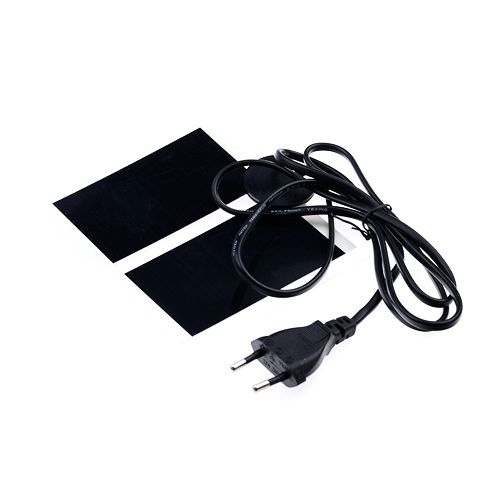 Avalon Magic Plants
Avalon Heating Mat Small - 14x15 cm
€14.95View in shop
Avalon Magic Plants
Avalon Heating Mat Small - 14x15 cm
€14.95View in shop
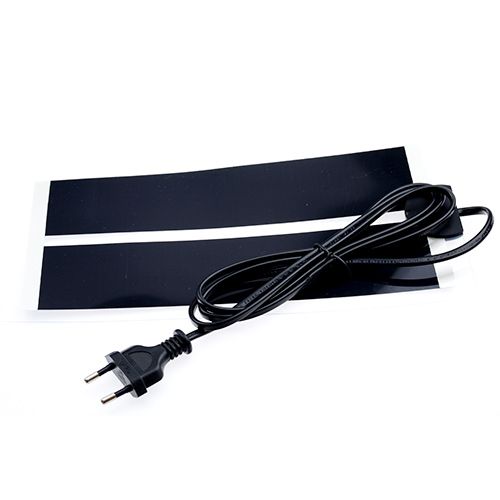 Avalon Magic Plants
Avalon Heating Mat Large - 15x28 cm
€19.95View in shop
Avalon Magic Plants
Avalon Heating Mat Large - 15x28 cm
€19.95View in shop
Step 3: prick out early, into a deep pot
Embrapa advises moving seedlings 1 to 2 weeks after germination begins, or once they are 3 to 5 cm tall. The seedling forms a taproot early, so choose a deep pot and handle the root as little as possible. Growth in the first months is fast. The first leaves are simpler than an adult's; the first fully adult, twice-divided leaf appeared in weeks 12 to 14 in the Mexican study.
Step 4: light, water and warmth
- Light. The tree is a pioneer that needs full sun. Give it the brightest window you have, or a grow light in winter.
- Water. Water thoroughly, then let the top of the compost dry before the next watering. A tree of sandy dry-forest soils does not like cold, wet roots.
- Food. Root nodules with Rhizobium bacteria fix nitrogen in the wild. A potted plant still benefits from a weak general fertiliser in the growing season; we found no published feeding trial for pots.
- Warmth. The lowest temperature recorded in its natural range is 10.1 °C. Use that as a working minimum and bring the plant in well before nights get colder.
- Summer outside. A warm, sunny, sheltered spot outdoors suits it once nights stay mild. Bring it in again in early autumn.
Step 5: the first winter
Short days slow the plant down, much as the dry season does in Brazil. Keep it bright and above 10 °C, water less, and do not feed until growth picks up again with longer days in spring.
Handling and pets
Twigs and trunk carry prickles, so wear gloves when repotting an older plant. Leaves and pods are known to cause birth defects in grazing sheep and goats (Lima Bezerra et al. 2021); keep the plant out of reach of animals that might nibble it.
Which pack to order
- One packet of seeds gives you ten tries, enough for two or three plants once you allow for losses.
- Add the small heating mat if your sowing spot is below 20 °C.
- Choose the large heating mat for a seed tray or several pots at once.
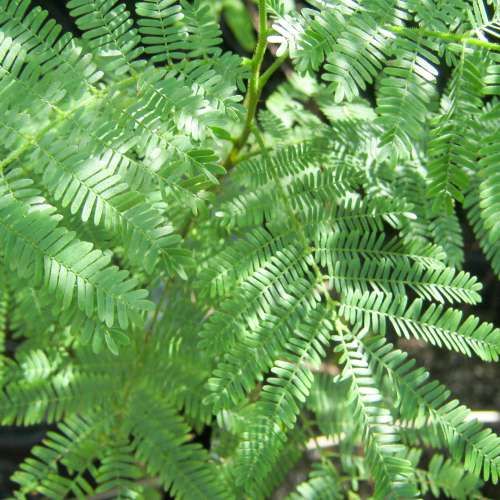
Once your tree is growing, the field marks help you follow how it develops.